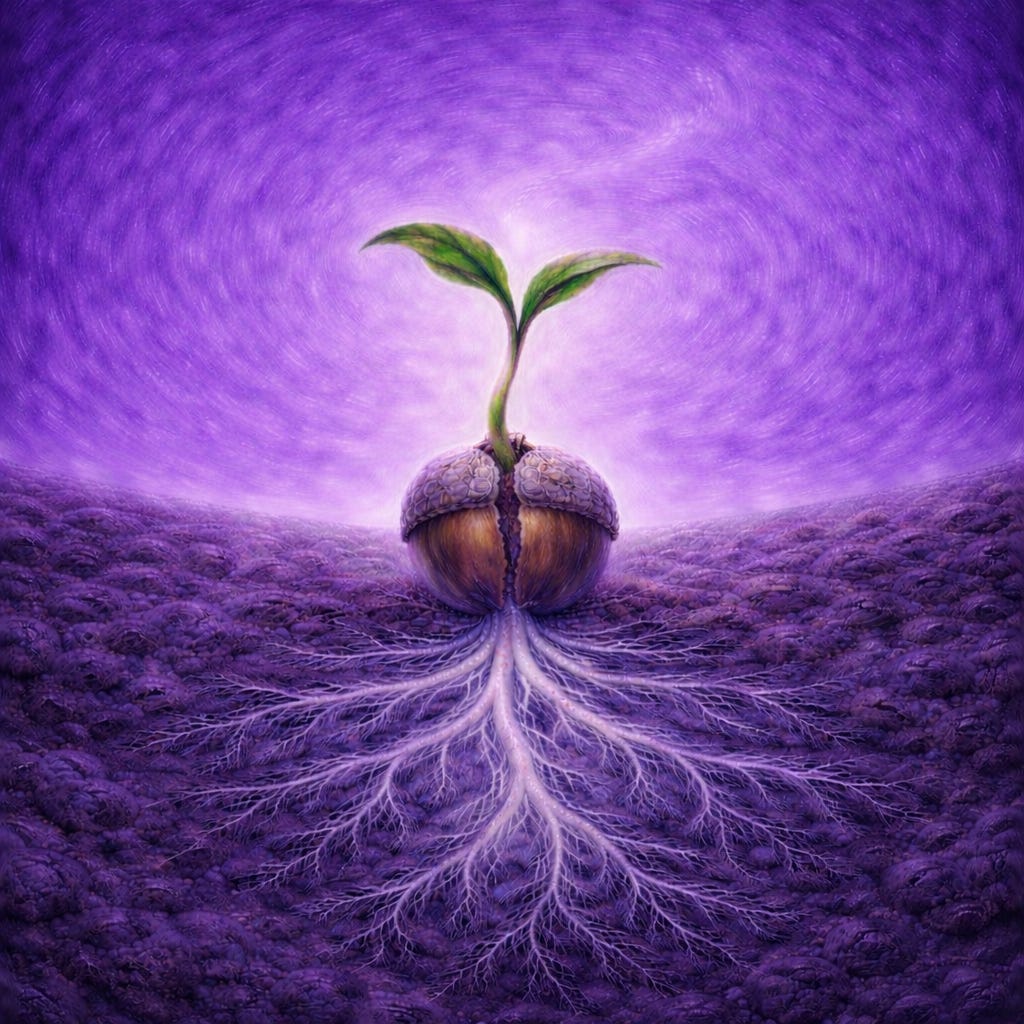

Read as a song lyric, this poem works as a collective rebirth chant. It is not a loud proclamation, but a deep invitation, spoken with a steady and serene voice.
The song begins in a dreamlike state: the echo of an ancient verse crossing the centuries. Musically, this suggests a slow, almost ritual tempo, as if the voice were emerging from shared memory. The idea of a verse that does not die because it beats within us introduces the central theme: identity is not a slogan, it is a living pulse.
The contrast appears with the image of the people’s open wounds. Here, the song does not idealize the past; it faces it honestly. But immediately, hands rise to heal. This marks the transition from sorrow to loving responsibility. What moves the song is not rage, but a brave love, one that can look backward without getting stuck, and walk forward without fear.
When the lyric says that catalanism cannot remain imprisoned in history, the song reaches its ideological core. It is not about repeating old forms, but about allowing a new spirit to be born: open, wise, universal. This section calls for a clear, expansive melody, one that releases lament and moves toward light.
The phrase “not to dissolve, but to shine” functions as a natural refrain: simple, powerful, memorable. Here, the song becomes an affirmation of presence, not an act of opposition.
Addressing “brothers and sisters” transforms the individual voice into a collective one. The ancient king appears not as past authority, but as a symbol of continuity and future vision. The call to be a beacon of justice, freedom, and wisdom is not aggressive epic, it is moral leadership.
The ending is decisive: the new world is not born from the scream, but from the fertile silence of those who love. Musically, this suggests a gentle descent, a clean and restrained closing, allowing the words courage, nobility, and clean souls to resonate as lived values rather than slogans.
As a song, this poem does not seek to raise fists, but to awaken consciousness. It is meant to be listened to standing still, with an open heart, like accepting a shared responsibility. It does not say follow me. It says: let us begin. And it says it with a calm that convinces.
I have dreamed
of the echo of an ancient verse
crossing centuries without fading.

A verse that does not die,
because it beats inside us,
calling us to be reborn
not in fury,
but in tenderness.

I have seen
the wounds of our people,
open, bleeding,
unhidden.

But I have also seen hands rise—
steady, brave,
ready to heal
with the love of those
who are not afraid
to look back
nor to walk forward.

The catalanism in our blood
cannot remain imprisoned in history.
It must be reborn
as spirit:

open,
wise,
universal.

Not to dissolve,
but to shine.

Let it become
a serene, lucid voice
among the peoples of the world,
living proof
that diversity is not a threat,
but a miracle.

To you,
brothers and sisters,
I say what an ancient king
once whispered
with his eyes fixed on tomorrow:

be a beacon
of justice,
of freedom,
of wisdom.

Be the seed
of a new world,
one not born from the scream,
but from the fertile silence
of those who love.

Let us begin.

With courage.
With nobility.
With clean souls.

Piath Songs CD's & Vynils edited